
Catalog Advanced Search
-
Contains 1 Component(s)
IBM i has long been the backbone of mission-critical enterprise workloads, prized for its reliability, security, and integrated database. But as AI evolves beyond simple chat interfaces into autonomous, action-taking agents, the IBM i ecosystem stands at an inflection point. AI agents can now reason, plan, and execute multi-step tasks. Imagine the power when married to a platform with decades of business logic and operational knowledge! This session explores the convergence of agentic AI and IBM i, covering the emerging architecture patterns that allow AI agents to interact directly with IBM i systems. Among other things, we will examine the Model Context Protocol (MCP), an open standard that gives AI agents a structured way to discover and invoke tools, query databases, and interact with system resources. Plus, we'll give a sneak peek of some exciting offerings that may be coming in the near future!
IBM i has long been the backbone of mission-critical enterprise workloads, prized for its reliability, security, and integrated database. But as AI evolves beyond simple chat interfaces into autonomous, action-taking agents, the IBM i ecosystem stands at an inflection point. AI agents can now reason, plan, and execute multi-step tasks. Imagine the power when married to a platform with decades of business logic and operational knowledge! This session explores the convergence of agentic AI and IBM i, covering the emerging architecture patterns that allow AI agents to interact directly with IBM i systems. Among other things, we will examine the Model Context Protocol (MCP), an open standard that gives AI agents a structured way to discover and invoke tools, query databases, and interact with system resources. Plus, we'll give a sneak peek of some exciting offerings that may be coming in the near future!
Jesse Gorzinski
Senior Business Architect - Open Source Software on IBM i
IBM
Jesse Gorzinski works for the IBM i development lab in Rochester, MN. He is the Business Architect of open source technologies. Jesse, who was doing RPG programming at the age of 18, is an expert on application development on IBM i, as well as system access and modernization. His hobbies include playing with his dog, replacing complex applications with 5-line Python programs, and advocating for the use of new technologies on IBM i!Prior to his 2006 employment at IBM, Jesse worked with the AS/400 as an I/T administrator for an IBM customer in the finance/mortgage industry, where he specialized in data backup/recovery, process optimization, and information integrity. He has a Bachelor's degree in Computer Science as well as a Master of Business Administration degree
-
Register
- Member - Free!
- More Information
-
Register
-
Contains 4 Product(s) 4 new product(s) added recently
POWERUp 26 may be behind us, but there’s still plenty to gain from the session recordings. Whether you missed a session, want a refresher, or simply want to relive the experience, part one of the POWERUp sessions is now available to watch.
POWERUp 26 may be behind us, but there’s still plenty to gain from the session recordings. Whether you missed a session, want a refresher, or simply want to relive the experience, part one of the POWERUp sessions is now available to watch.
-
Register
- Member - Free!
- More Information
-
Register
-
Contains 1 Component(s)
IBM i has been the backbone of enterprise stability, but shifting expectations now demand more. IT modernization has become a strategic priority, driving efficiency, innovation, and enhanced customer experiences. In the next two years, 25–30% of IT budgets will focus on AI readiness, cybersecurity, automation, and data optimization. For IBM i teams, this is both a challenge and an opportunity to turn barriers like legacy complexity and siloed data into catalysts for growth and innovation. In this keynote, Rashmi Agrawal, VP of Engineering at Rocket Software, will reframe IBM i not as a legacy constraint but as a strategic advantage. With the right modernization roadmap—spanning applications, data, infrastructure, and security—IBM i teams can accelerate digital transformation, enable AI initiatives, and deliver measurable business outcomes that resonate with the C-suite.
IBM i has been the backbone of enterprise stability, but shifting expectations now demand more. IT modernization has become a strategic priority, driving efficiency, innovation, and enhanced customer experiences. In the next two years, 25–30% of IT budgets will focus on AI readiness, cybersecurity, automation, and data optimization. For IBM i teams, this is both a challenge and an opportunity to turn barriers like legacy complexity and siloed data into catalysts for growth and innovation. In this keynote, Rashmi Agrawal, VP of Engineering at Rocket Software, will reframe IBM i not as a legacy constraint but as a strategic advantage. With the right modernization roadmap—spanning applications, data, infrastructure, and security—IBM i teams can accelerate digital transformation, enable AI initiatives, and deliver measurable business outcomes that resonate with the C-suite.
In this session, you’ll discover:
- How AI enhances human-driven decision-making in workload modernization. With 54% of enterprises expecting AI-assisted migration and optimization, IBM i teams can leverage AI to augment—not replace—human expertise.
- Why modernization maturity drives business performance. Modernization leaders report significantly higher gains in efficiency, innovation, and customer satisfaction, proving the direct correlation between IT transformation and business success.
- What RPG, COBOL, and CL developers need to prepare for. From data quality and integration to AI-augmented coding and secure-by-design practices, developers must evolve their skills to meet new demands. AI-assisted development, testing, and infrastructure readiness will be critical.
- How technical leaders can overcome modernization blockers. Learn strategies to address data silos, compliance complexity, and talent gaps while preserving the resilience and reliability that make IBM i indispensable.
Join us to discover how to transform your IBM i environment into an AI-ready, modernization-driven foundation for the next decade of innovation.
Rashmi Agrawal
Vice President – Engineering, App Mod Vice President – Engineering, App Mod
Rocket Software
Rashmi is a highly accomplished Global R&D leader with 26 years of experience driving product innovation and execution at enterprise-grade companies like IBM, Dell/EMC, and Rocket Software. Her expertise spans a wide range of products, including datacenter, cloud, AI, storage, developer efficiency, supply management, and application solutions.
While at IBM, she led areas of IBM SONAS and System Director products (For System X and Power) and IBM Dynix/ptx Operating Systems. She moved on to work on Isilon OneFS solution at Dell EMC responsible for cloud enablement. At Rocket Software, she is responsible for Rocket iCluster (HA/DR), Rocket DevOps, Rocket MXWeb (Modernization of Web), Rocket API and Rocket Process Insights along with some other non-IBM i products. As we are building these products, we are infusing various aspects of Security, Cloud and AI into our products along with other performance and feature related development.
Adept at taking next-generation products from concept to go-to-market, Rashmi has a proven track record of building and leading world-class, geographically dispersed teams (US, China, Netherlands, Germany, UK, India). She is passionate about building strong teams through hiring, coaching, and mentorship, empowering individuals to reach their full potential.Jeroen van Dun
Senior Manager, Product Management
Rocket Software
Jeroen van Dun is a Senior Manager, Product Management at Rocket Software. Jeroen has more than 20 years of experience in product management and software development. He has lead R&D teams developing SOA, APIs, and mobile, with a focus on IBM i. In his current role, Jeroen leads the team responsible for research of new technologies and product design and development for Rocket Software’s IBM i Solutions. Jeroen has a Computer Science degree from Avans Hogeschool Breda in The Netherlands.
-
Register
- Member - Free!
- More Information
-
Contains 1 Component(s)
IBM Bob is an AI-powered development partner for IBM i. Your IBM i runs everything. Bob helps you run faster. Bob accelerates initiatives that traditionally take months like converting fixed-format RPG to free-form, migrating DDS to SQL DDL, refactoring monolithic programs into modular services, and generating comprehensive documentation and tests. Bob bridges the skills gap and ensures the long-term viability of IBM i investments through intelligent, incremental modernization that preserves decades of business logic. The next era of IBM i development starts now.
IBM Bob is an AI-powered development partner for IBM i. Your IBM i runs everything. Bob helps you run faster. Bob accelerates initiatives that traditionally take months like converting fixed-format RPG to free-form, migrating DDS to SQL DDL, refactoring monolithic programs into modular services, and generating comprehensive documentation and tests. Bob bridges the skills gap and ensures the long-term viability of IBM i investments through intelligent, incremental modernization that preserves decades of business logic. The next era of IBM i development starts now.
Tim Rowe
Business Architect Application Development & Systems Management for IBM i
Tim Rowe is the Business Architect for IBM i responsible for System Management and Application Development. He has a passion for modernization on IBM i and how we can continue to move IBM i into the world of 'Normal' . In his spare time he is a certified Soccer referee and enjoys refereeing games with his youngest son.
-
Register
- Member - Free!
- More Information
-
Register
-
Contains 1 Component(s)
This opening session was recorded at POWERUp 2026 and goes over upcoming updates for COMMON as well as the IBM i platform as a whole.
This opening session was recorded at POWERUp 2026 and goes over upcoming updates for COMMON as well as the IBM i platform as a whole.
Floyd Del Muro
Director, Business Development at Seneca Global
With 31 years of experience on the IBM midrange platform, Floyd is Director, Business Development for the SenecaGlobal group. In his role at SenecaGlobal, Floyd has been extensively involved in the management of DevOps , Enterprise Modernization and refactoring projects on IBM i, from planning stages through to delivery. His expertise in hybrid application development both native and Cloud makes him a trusted advisor for companies in project rollout, managed services and the introduction of agile methods. Floyd is a trusted global speaker on the subjects of DevOps, Release Management, Modernization, Version Control and BI.
Steve Bradshaw
Friendly Techie
RowtonIT.com
My latest work as the Friendly Techie, includes assisting IBM i with the design and testing with IBM i 7.6 as both Beta Tester and Redbook Author, and as assistant in the design and testing of the new IBM i Migrate While Active tool and the AI based RPG Code Assistant.
I have worked in the IBM Business Partner world for over thirty years now and despite IBM's best attempts I still love them ;-) My career started as an RPG developer but for the last twenty years I have specialised in System Design, installation and management. In 2008 I founded my own company (Rowton) and now I and my team spend my time supporting clients or designing new IT solutions using a combination of Power servers, Intel and storage with a little extra cloud magic where it's needed.
When I'm not looking after my own clients, I help run the UK's largest IBM i User Group the i-UG and also serve on the Common Europe Advisory Council (CEAC) to help IBM shape the future of IBM i. In 2019, IBM made me an IBM Champion in recognition of the work I have done to help and evangelise the IBM i platform, Happy Days :-)
I have a love of teaching IBM i and have spent over a decade volunteering to teach at IBM i events around the world, in more recent times I have been creating my online webinars. I am a firm believer that the more I teach, the more I learn.Jack Woehr
Senior Engineer, Absolute Performance, Inc.
Hillery Hunter
General Manager IBM Power
IBM
Hillery is the General Manager for IBM Power and serves as IBM Infrastructure CTO. In this role, she is focused on setting the global strategy for both Power and Infrastructure Platform in addition to driving cross-functional innovation and growth across IBM's Infrastructure portfolio which includes IBM zSystems, Power, Storage, TLS and IBM Cloud.
-
Register
- Member - Free!
- More Information
-
Register
-
Contains 1 Component(s)
In this Inside IBM Bob: A Hands‑On Demo session, Tim Rowe led a hands‑on guided tour of IBM Bob, giving participants a practical, end‑to‑end look at its capabilities and role within the IBM i ecosystem. Through live demonstrations and walkthroughs, the session highlighted how Bob can be used in real‑world scenarios to support system management, streamline administrative tasks, and improve overall workflow efficiency. Participants gained valuable insight into where Bob fits within the broader IBM i strategy, along with best practices and guidance for getting started, making the session both informative and immediately applicable.
In this Inside IBM Bob: A Hands‑On Demo session, Tim Rowe led a hands‑on guided tour of IBM Bob, giving participants a practical, end‑to‑end look at its capabilities and role within the IBM i ecosystem. Through live demonstrations and walkthroughs, the session highlighted how Bob can be used in real‑world scenarios to support system management, streamline administrative tasks, and improve overall workflow efficiency. Participants gained valuable insight into where Bob fits within the broader IBM i strategy, along with best practices and guidance for getting started, making the session both informative and immediately applicable.
Tim Rowe
Business Architect Application Development & Systems Management for IBM i
Tim Rowe is the Business Architect for IBM i responsible for System Management and Application Development. He has a passion for modernization on IBM i and how we can continue to move IBM i into the world of 'Normal' . In his spare time he is a certified Soccer referee and enjoys refereeing games with his youngest son.
-
Register
- Member - Free!
- Non-member - Free!
- More Information
-
Register
-
Contains 6 Product(s)
The IBM i team is announcing a series of Guided Tours on important IBM i topics. These Guided Tours are intended for IBM and Business Partner sellers and technical sellers. Customers are also welcome to attend the Guided Tour sessions.
The IBM i team is announcing a series of Guided Tours on important IBM i topics. These Guided Tours are intended for IBM and Business Partner sellers and technical sellers. Customers are also welcome to attend the Guided Tour sessions.
-
Register
- Member - Free!
- Non-member - Free!
- More Information
-
Register
-
Contains 1 Component(s)
In this Guided Tour, Amy Blea shares key insights and perspectives on IBM Bob, offering a closer look at how the tool helps organizations better understand their IBM i applications, support modernization initiatives, and enable smarter, more efficient development practices.
In this Guided Tour, Amy Blea shares key insights and perspectives on IBM Bob, offering a closer look at how the tool helps organizations better understand their IBM i applications, support modernization initiatives, and enable smarter, more efficient development practices. Through guided examples and practical discussions, attendees gain visibility into how Bob brings clarity to complex environments and helps teams make more confident decisions. It’s a great opportunity to learn, ask questions, and engage—whether you’re deeply experienced with the IBM i platform or just beginning to explore what’s next. And of course, IBM Bob will be along for the ride, helping make the journey both informative and fun.
Amy Blea
Senior Product Manager
IBM
Senior Product Manager for IBM i with 15 years of strategic transformation and product lifecycle oversight, people development, change management, operational excellence, and corporate growth experience.
-
Register
- Member - Free!
- Non-member - Free!
- More Information
-
Contains 1 Component(s)
Welcome to IBM Bob. To celebrate the general availability of IBM Bob, Scott and Tim put Bob through its paces, taking some SQL, creating design documents, asking for coding improvements, and even getting Bob to write some new SQL. Bob is ready to be your IBM i development partner.
Welcome to IBM Bob. To celebrate the general availability of IBM Bob, Scott and Tim put Bob through its paces, taking some SQL, creating design documents, asking for coding improvements, and even getting Bob to write some new SQL. Bob is ready to be your IBM i development partner.
Tim Rowe
Business Architect Application Development & Systems Management for IBM i
Tim Rowe is the Business Architect for IBM i responsible for System Management and Application Development. He has a passion for modernization on IBM i and how we can continue to move IBM i into the world of 'Normal' . In his spare time he is a certified Soccer referee and enjoys refereeing games with his youngest son.
Scott Forstie
Db2 for i Business Architect
Scott Forstie is a Senior Technical Staff Member within IBM i development and spends most of his time working as the Db2 for i Business Architect. He has worked on IBM operating system development since joining IBM in 1989.
Scott is a frequently published author, speaker at industry events around the globe and can be found @Forstie_IBMi and forstie@us.ibm.com. Scott is an avid runner and enjoys cooking.
-
Register
- Member - Free!
- Non-member - Free!
- More Information
-
Register
-
Contains 105 Product(s)
Short demonstrations of tools to help you in your everyday work. Presented by Scott Forstie and Tim Rowe, IBM
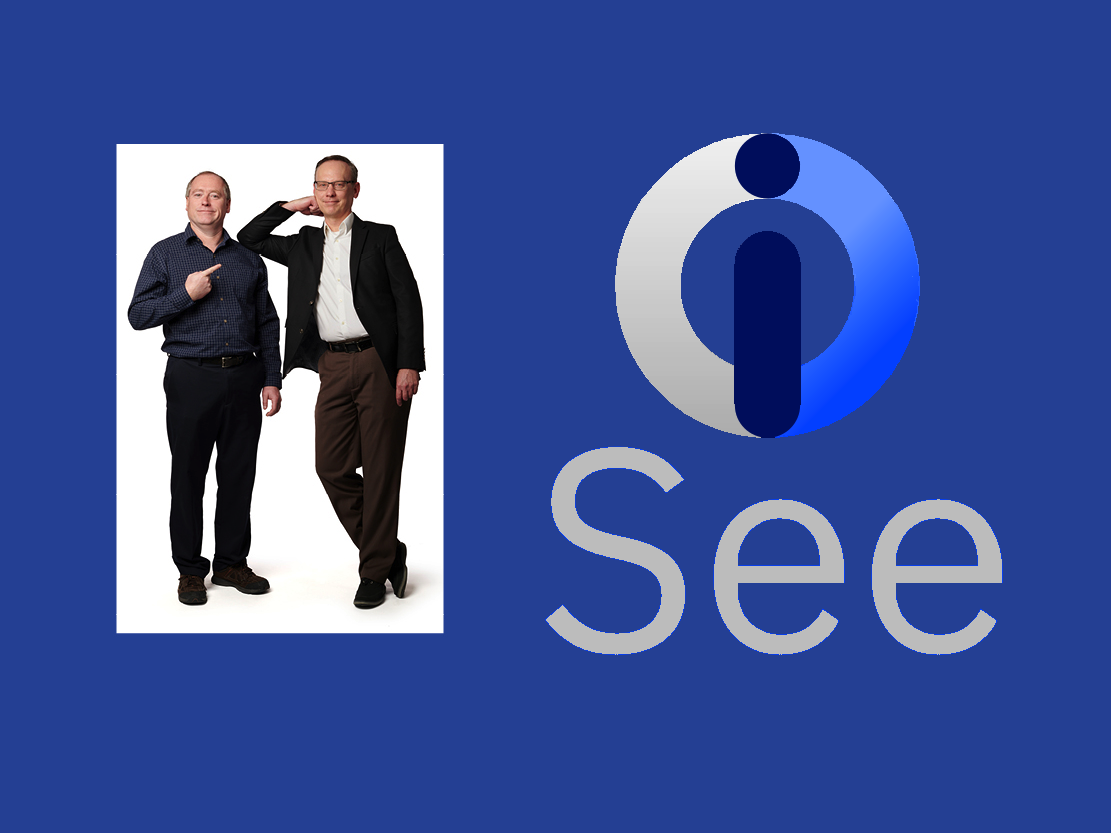
Short demonstrations of tools, techniques and examples (including working SQL examples!!) to help you solve real problems that are part of your everyday work. Presented by Scott Forstie and Tim Rowe, IBM-
Register
- Member - Free!
- Non-member - Free!
- More Information
-
Register